Lee Priest is one of the most recognizable Australian professional bodybuilders of his generation, known for extraordinary arm development, dense muscularity, and a competitive career that began at a remarkably young age. Born lee priest—professionally known as Lee Priest—he built his reputation through elite bodybuilding contests, international appearances, and a physique that stood out even among much larger competitors.
Standing at just 1.63 m (5 feet 4 inches), Priest developed exceptional muscle density and famously large arms while competing at around 90 kg (198 lbs). His career also extended beyond traditional bodybuilding through guest posing, interviews, merchandise, and online content. His story combines early dedication, major professional competitions, controversial moments, and a lasting influence on bodybuilding culture.
Lee Priest Profile Summary
| Quick Fact | Details |
| Real Name | Lee Andrew McCutcheon |
| Professional Name | Lee Priest |
| Date of Birth | July 6, 1972 |
| Birthplace | Newcastle, New South Wales, Australia |
| Nationality | Australian |
| Profession | Retired professional bodybuilder and public figure |
| Height | 1.63 m (5 feet 4 inches) |
| Contest Weight | Approx. 90 kg (198 lbs) |
| Off-Season Weight | Approx. 120 kg (265 lbs) |
| Arm Size | Reported at around 22 inches |
| Spouse | Catherine LeFrançois (married 2000–2005) |
| Child | Alexandra Leigh |
Who Is Lee Priest
Lee Priest, whose real name is Lee Andrew McCutcheon, is an Australian retired professional bodybuilder and public figure. He was born on July 6, 1972, in Newcastle, New South Wales, Australia, and developed an interest in bodybuilding at an unusually young age.
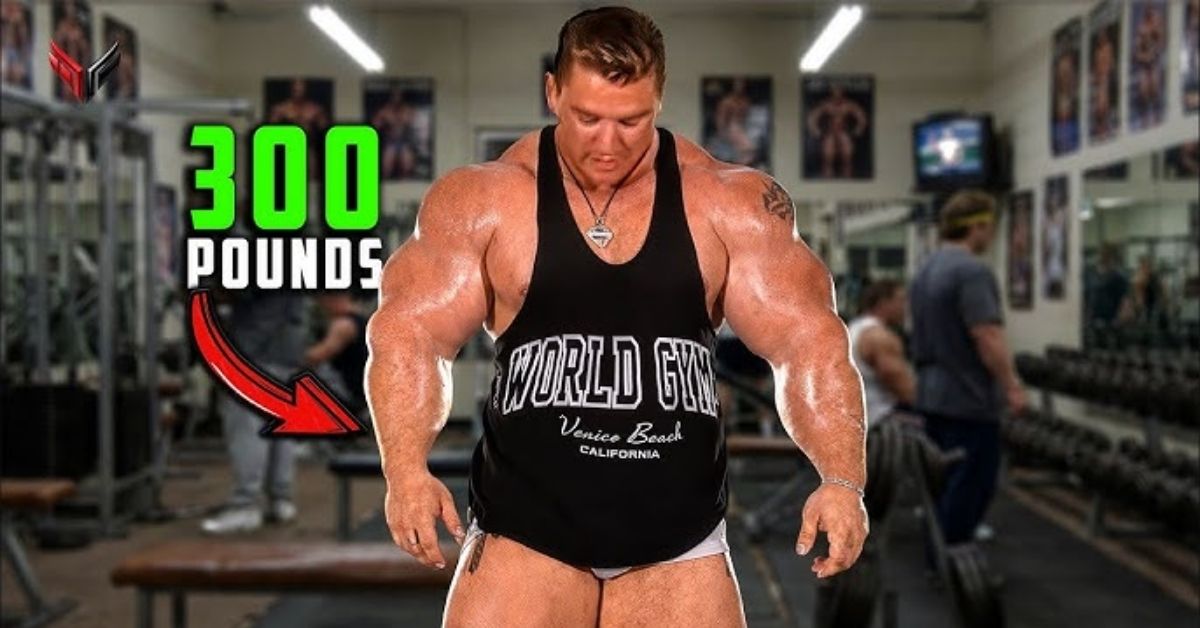
Priest became particularly famous for his combination of short stature, impressive muscle density, and highly developed arms. His physique demonstrated how dramatically muscular proportions can change the appearance of a shorter athlete on a professional bodybuilding stage.
He eventually competed as an IFBB bodybuilder, entering some of the world’s most important professional contests. His career placed him alongside famous names from the bodybuilding era that included Ronnie Coleman and other elite athletes who competed around the Mr. Olympia circuit.
Priest’s identity within bodybuilding was not based only on contest placings. His outspoken personality, distinctive appearance, and willingness to discuss the realities of the bodybuilding lifestyle helped him maintain a strong following long after his peak competitive years.
Early Life & Education
Lee Priest was born in Newcastle, Australia, and grew up in an environment where strength training and bodybuilding became important parts of his life.
His father was Andrew McCutcheon, while his mother was Lynn Priest. His family background and early exposure to physical training contributed to an interest in developing his physique.
Priest began training seriously while still young. Rather than treating bodybuilding as a temporary hobby, he gradually made weight training part of his everyday lifestyle.
His formal education consisted primarily of basic schooling in Australia. His later professional development came largely through bodybuilding itself, including training, competition experience, nutrition, travel, and interaction with other athletes.
The most notable part of his early development was the speed at which he progressed physically. The young Lee Priest transformation became an important part of his eventual reputation because he was already displaying unusual muscularity before reaching the professional stage.
Career Breakthrough
Priest’s competitive breakthrough came from combining exceptional genetics with years of consistent training. His compact frame gave him the ability to create a visually powerful physique, particularly through his arms, shoulders, chest, and back.
Obtaining an IFBB Pro card represented a major step in his professional career. It allowed him to compete against established international bodybuilders and pursue opportunities at the highest level of professional competition.
His relatively short height became part of his competitive identity rather than simply a limitation. On stage, his muscular proportions allowed him to appear extremely thick and powerful.
The transition from promising young competitor to established professional also exposed Priest to the demands of the bodybuilding lifestyle: strict nutrition, intense training, posing practice, travel, recovery, and maintaining competition-level conditioning.
Major Achievements
Lee Priest developed a substantial professional record and earned recognition through international bodybuilding competitions and Grand Prix victories.
Among the achievements associated with his career are:
- Earning an IFBB Pro card.
- Competing against many of the leading professionals of his generation.
- Winning professional Grand Prix events.
- Making appearances at major international bodybuilding contests.
- Competing at the Mr. Olympia level.
- Becoming particularly recognized for his arms and triceps development.
- Building an international fan base despite his relatively short stature.
- Continuing his involvement with bodybuilding after stepping away from traditional competition.
His career is especially notable because he competed during one of professional bodybuilding’s highly competitive periods. The division included athletes with enormous bodyweight and increasingly extreme levels of muscular development.
Priest therefore had to rely heavily on muscle density, conditioning, symmetry, and presentation to compete effectively against significantly taller athletes.
Physique Stats: Height, Arms & Triceps
Lee Priest’s physical measurements remain one of the most searched aspects of his career because his proportions were unusual for an elite bodybuilder.
| Physique Detail | Lee Priest |
| Height | 1.63 m (5 feet 4 inches) |
| Contest weight | Approx. 90 kg / 198 lbs |
| Off-season weight | Approx. 120 kg / 265 lbs |
| Reported arm size | Around 22 inches |
| Eye color | Blue |
| Nationality | Australian |
These measurements help explain why Priest became such a memorable figure. At 1.63 m, carrying close to 90 kg of contest muscle created an extremely compact and muscular appearance.
His reported 22-inch arm size was one of his most famous physical characteristics. The size was even more striking because of his height.
Triceps Development
Priest’s triceps development played an important role in the appearance of his arms. Large arms require more than impressive biceps; the triceps make up a significant portion of total upper-arm mass.
His dense triceps helped create the thick side profile and powerful arm appearance that became closely associated with his name.
His physique is also an example of how muscle density can affect visual proportions. A shorter athlete with substantial muscle mass can appear dramatically thicker than a taller athlete at the same bodyweight.
Career Beyond Bodybuilding
Lee Priest’s career did not end simply because his competitive bodybuilding period changed.
He remained involved in the fitness and bodybuilding community through:
- Guest posing appearances
- Interviews
- Online content
- Bodybuilding discussions
- Merchandise sales
- Public appearances
- Fitness-related media
His outspoken approach helped him maintain relevance in an industry where many former competitors gradually disappear from public attention.
Online content and interviews also gave Priest an opportunity to discuss training, professional bodybuilding, competitors, controversies, and his experiences within the sport.
This extended career demonstrates that professional bodybuilding can create opportunities beyond competition prize money. Sponsorships, supplement sponsorships, appearances, merchandise, and digital content can all become additional sources of income for established bodybuilding personalities.
Net Worth
Lee Priest’s net worth is commonly estimated in the range of $1.5–3 million, although an exact figure is difficult to verify because private financial information is not publicly established.
For a professional bodybuilder, income can come from several different sources rather than competition winnings alone.
Potential revenue streams associated with a long bodybuilding career include:
- Competition prize money
- Supplement sponsorships
- Guest posing appearances
- Paid public appearances
- Merchandise sales
- Online content and interviews
- Fitness-related promotional opportunities
It is important to treat the $1.5–3 million estimate as an approximate figure rather than a confirmed financial statement. Bodybuilding income can also change considerably throughout an athlete’s career.
Personal Life & Relationships
Lee Priest has generally kept portions of his personal life separate from his professional bodybuilding identity, although some family and relationship details are publicly associated with his biography.
He was married to Catherine LeFrançois, with the marriage taking place in 2000 and ending in 2005.
Priest also has a daughter named Alexandra Leigh.
His parents are identified as Andrew McCutcheon (father) and Lynn Priest (mother).
Priest’s background also includes a Christian religion, and he is known for his Australian nationality and strong connection to his Newcastle roots.
Interesting Facts
Several details make Lee Priest particularly distinctive within professional bodybuilding:
- He was born in Newcastle, Australia.
- His professional name is Lee Priest, while his real name is Lee Andrew McCutcheon.
- His height is only 1.63 m (5 feet 4 inches).
- He became famous for exceptionally large arms.
- His reported arm size reached approximately 22 inches.
- He could weigh approximately 90 kg / 198 lbs in contest condition.
- His off-season weight could reach approximately 120 kg / 265 lbs.
- He had blue eyes.
- He competed against some of the biggest bodybuilders of his generation.
- He became one of the memorable shorter athletes at Olympia level.
- His career included professional competitions, appearances, interviews, and online bodybuilding content.
- He remained outspoken about bodybuilding culture and professional competition.
Personal Life
Outside competition, Priest’s identity has remained strongly connected to bodybuilding. Unlike athletes who leave the sport completely after retirement, he continued discussing the industry and sharing his views with fans.
His personality has also been an important part of his public image. He has frequently been viewed as direct and outspoken, which helped distinguish him from more reserved bodybuilding personalities.
His personal story is therefore closely linked to the broader bodybuilding lifestyle: intense training, physical transformation, competition preparation, travel, relationships, and life after professional competition.
Lee Priest Competition History
Lee Priest competed extensively during the professional bodybuilding era in which the sport was becoming increasingly international.
His competition history includes appearances at major professional events and Grand Prix contests. He also competed at the Mr. Olympia level, placing him among the athletes who reached the highest-profile stage in professional bodybuilding.
Rather than judging his career only by individual victories, his competition history is important because of the quality of opponents he faced.
Priest competed in an era featuring extremely muscular athletes with considerable height and bodyweight advantages. His ability to remain competitive demonstrated the effectiveness of his conditioning, proportions, muscle density, and stage presentation.
His professional record is therefore best understood as a combination of contest victories, high-level appearances, and sustained recognition within professional bodybuilding.
Early Life & “Lee Priest Young” Transformation
The phrase “Lee Priest young” is often associated with photographs and discussions about his early bodybuilding development.
Priest’s transformation was unusual because he developed a highly muscular physique at an age when most people are only beginning to understand structured resistance training.
His early progress illustrates several fundamental principles of physique development:
- Consistent resistance training
- Progressive muscular development
- Adequate nutrition
- Long-term discipline
- Genetic potential
- Attention to recovery
- Regular posing and presentation
What separated Priest from many recreational lifters was his willingness to pursue bodybuilding as a serious competitive discipline.
His early physique also established the foundation for the extreme arm development that later became his trademark.
Bodybuilding Career & Competitions
Priest’s professional career developed during a period when bodybuilding was becoming increasingly competitive worldwide.
The sport rewarded athletes who could combine muscular size with conditioning, symmetry, and stage presentation. Priest brought a particularly dense and compact physique to this environment.
His career included professional contests, international events, Grand Prix competitions, and appearances at the Mr. Olympia level.
One of the defining challenges of his career was competing against much taller athletes. At the highest level, a difference in height can significantly affect how muscle mass is distributed visually.
Priest overcame much of this disadvantage by maximizing his muscular development. His arms, shoulders, chest, and overall thickness became central elements of his stage identity.
Lee Priest Training Style & Workout Routine
Lee Priest became known for an intense approach to resistance training. His training philosophy was strongly connected to building muscular size and maintaining the dense appearance required for competition.
Rather than relying on a single exercise, a serious bodybuilding routine generally combines compound movements with targeted isolation work.
A training approach associated with the type of physique Priest developed can include:
- Heavy pressing movements for chest and shoulders
- Rows and pulling exercises for back thickness
- Squats and leg movements for lower-body development
- Direct biceps training
- High-volume triceps work
- Lateral raises for shoulder width
- Calf and abdominal training
- Regular posing practice
The key lesson from Priest’s career is not that one specific routine creates his physique. Genetics, years of training, nutrition, recovery, and professional-level dedication all contributed to his results.
His famous arms also demonstrate the importance of direct arm training when arm development is a major physique priority.
Lee Priest Diet & Nutrition
Nutrition was another major component of Priest’s bodybuilding lifestyle. Professional bodybuilding requires controlling food intake according to whether an athlete is gaining muscle, maintaining size, or preparing for competition.
A bodybuilding diet typically emphasizes:
- High-quality protein sources
- Carbohydrates for training energy
- Dietary fats for overall nutrition
- Adequate hydration
- Regular meals
- Controlled calorie intake
- Adjustments during contest preparation
The major difference between contest and off-season nutrition is the goal. During an off-season phase, an athlete may consume enough calories to support greater bodyweight and muscle growth. During contest preparation, calories and food choices are adjusted to reduce body fat while preserving muscle.
Priest’s reported difference between approximately 90 kg contest weight and 120 kg off-season weight illustrates how dramatically an elite bodybuilder’s bodyweight can change across different phases.
Controversies & IFBB Issues
Lee Priest’s career also included controversies involving professional bodybuilding organizations and competition-related issues.
His relationship with the IFBB became complicated at different points, contributing to his decision to explore alternative federations and other competitive opportunities.
These disputes became part of his public identity because Priest was known for expressing strong opinions about bodybuilding organizations and industry decisions.
It is important, however, to distinguish confirmed events from later fan discussions or speculation. Controversial bodybuilding stories are often repeated online without full context.
The broader lesson from Priest’s career is that professional bodybuilding involves not only physical preparation but also organizational rules, eligibility requirements, contracts, competition politics, and federation decisions.
Lee Priest Today
Today, Lee Priest is best described as a retired bodybuilder and public figure rather than an active professional competitor.
His connection to bodybuilding continues through media appearances, online content, interviews, and discussions about the sport.
His experience gives him a unique perspective on professional bodybuilding because he competed during a major era of the sport and faced many highly accomplished athletes.
He also remains recognizable because his physical proportions were so distinctive. Even years after his competitive career, bodybuilding fans continue to discuss his arms, triceps development, contest conditioning, and competition history.
Lee Priest Legacy
Lee Priest’s legacy goes beyond the number of contests he won.
He demonstrated that height does not determine whether an athlete can create an extraordinary bodybuilding physique. At only 1.63 m, he became famous for a level of muscular development that allowed him to compete against significantly larger athletes.
His career also changed how fans viewed shorter athletes at Olympia level. Instead of attempting to imitate the proportions of taller bodybuilders, Priest maximized the advantages of his own frame.
His legacy can be summarized through several defining qualities:
- Exceptional arm development
- Dense muscularity
- Strong stage presence
- International professional experience
- Willingness to speak openly about bodybuilding
- Longevity within bodybuilding culture
- A distinctive approach to his physical proportions
For many fans, Lee Priest represents a bodybuilding era when individual personality was as memorable as physical size.
His story remains relevant because it combines athletic ambition, physical transformation, professional competition, controversy, and life after the stage. Few shorter athletes achieved the same level of recognition, making Priest an enduring name in Australian and international bodybuilding.
FAQs
Who is Lee Priest?
Lee Priest is the professional name of Lee Andrew McCutcheon, an Australian retired professional bodybuilder and public figure known for his exceptional arm development and dense muscular physique.
When was Lee Priest born?
Lee Priest was born on July 6, 1972, in Newcastle, New South Wales, Australia.
How tall is Lee Priest?
Lee Priest is 1.63 m, or approximately 5 feet 4 inches tall.
How big were Lee Priest’s arms?
His arms have been widely reported at approximately 22 inches, making his arm development one of the most recognizable features of his physique.
How much did Lee Priest weigh?
His reported contest weight was approximately 90 kg (198 lbs), while his off-season weight could reach approximately 120 kg (265 lbs).
Did Lee Priest compete in Mr. Olympia?
Yes. Priest competed at the Mr. Olympia level during his professional bodybuilding career.
What was Lee Priest known for?
He was particularly known for his massive arms, triceps development, muscle density, conditioning, compact proportions, and outspoken personality.
What is Lee Priest’s net worth?
Public estimates commonly place Lee Priest’s net worth between $1.5 million and $3 million, although an exact figure has not been officially established.
Who was Lee Priest’s wife?
Lee Priest was married to Catherine LeFrançois from 2000 to 2005.
Does Lee Priest have children?
Yes. He has a daughter named Alexandra Leigh.
What is Lee Priest’s real name?
His real name is Lee Andrew McCutcheon.
Where is Lee Priest from?
Lee Priest is from Newcastle, New South Wales, Australia, and has Australian nationality.
What color are Lee Priest’s eyes?
Lee Priest has blue eyes.
Is Lee Priest still a professional bodybuilder?
No. He is a retired bodybuilder, although he remains involved in bodybuilding-related media, interviews, and online content.
Why is Lee Priest considered a bodybuilding icon?
Priest is remembered for achieving extraordinary muscularity despite being only 1.63 m tall. His arm development, muscle density, competitive career, personality, and influence on bodybuilding culture have helped establish his long-term legacy.