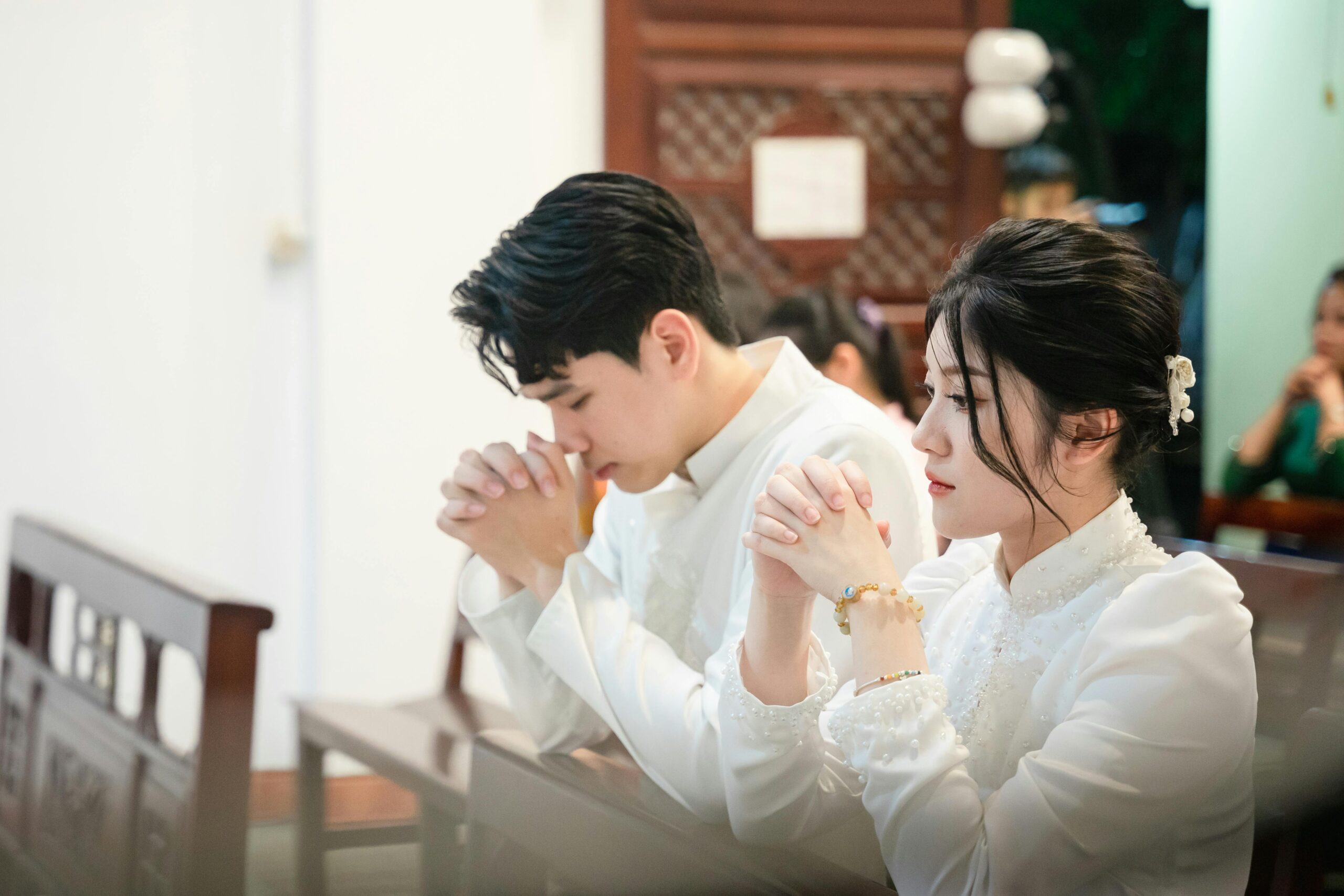

Most people don’t walk around thinking, “I’m afraid right now.” It’s subtler than that. It’s more like a background hum that doesn’t shut off — the nagging sense that something could go sideways, that the people you love are out there somewhere you can’t see them, that you’re holding together something that could fall apart, and you’re not entirely sure how. It doesn’t announce itself as fear. It just sits there, quiet and persistent, underneath whatever else you’re doing. Prayer for protection is what you do with that when you stop trying to carry it yourself.
People have been praying this way for as long as there have been people who believed in a God who listens. Asking him to stand between them and what they couldn’t handle. To watch what they couldn’t watch. To cover what was already outside their reach. It shows up in the oldest Psalms, in the early church, in traditions across centuries — not as a superstitious hedge against bad luck, but as a genuine theological act. An acknowledgment that you’re not actually the last line of defense for your own life or the lives of the people you love. That role belongs to someone else.
This piece is about what that prayer looks like, what Scripture says about it, and how to pray it from a place of actual faith rather than barely-managed panic.
What You’re Actually Asking For
“Protection” is a broad word, and it’s worth slowing down on what you actually mean when you ask God for it — because the Biblical picture of protection is richer and more specific than the vague version most of us carry around.
Physical protection is the obvious one. You’re about to travel somewhere. Your kid is sick. A situation in your life feels unstable and exposed. You ask God to keep harm away from the people and things you can’t fully guard yourself against. That’s real, and it matters, and there’s nothing small about asking for it.
But the Biblical writers were equally serious about spiritual protection — and they meant something specific by it. Ephesians 6 doesn’t talk about a God who wraps you in a bubble. It talks about armor you put on because you’re in actual conflict. Real threat, real equipment, real standing your ground. The protection available there isn’t passive. You have to engage it.
And then there’s the interior stuff — the protection nobody thinks to pray for until they’ve watched it go unprotected for a while. Bitterness that moves in slowly. A fear you’ve been naming as something else. Grief that stops being grief and starts being a wall. Asking God to guard your mind and your inner life isn’t dramatic or overly spiritual. It’s just honest about where a lot of the real damage happens.
Psalm 91: The Protection Psalm
If you’ve spent any time looking for a Biblical anchor on this topic, you’ve probably landed in Psalm 91. There’s a reason it’s the one people turn to — it doesn’t hedge, it doesn’t qualify, it just lays out what it looks like to be covered by God in specific and unambiguous terms.
“Whoever dwells in the shelter of the Most High will rest in the shadow of the Almighty. I will say of the Lord, ‘He is my refuge and my fortress, my God, in whom I trust.'” — Psalm 91:1-2
That opening word — dwells — is doing more work than it looks like. It’s not whoever visits the shelter or whoever runs to it in a crisis. Dwelling is where you actually live. The protection in this Psalm isn’t available on a drop-in basis. It’s connected to a sustained closeness with God, a relationship you’re actually in rather than one you touch occasionally and then go back to running things yourself.
The imagery that follows is dense — a shield, a rampart, a refuge, a fortress. Different pictures stacked on top of each other, all pointing at the same thing: God covering you from multiple angles, through multiple kinds of threats. Then verse 11, the famous one: “For he will command his angels concerning you to guard you in all your ways.” Jesus was quoted this verse during his wilderness temptation. The enemy tried to weaponize it. But the underlying truth of it — that angelic protection is a real thing in the Biblical framework, not folk religion draped over faith — holds.
Reading Psalm 91 slowly, not like you’re cashing in a promise but like you’re trying to understand what it actually describes about life under God’s cover — that’s worth the time. The full text at Bible Gateway is right there if you want to read it in full before you pray.
What Protection Prayer Is Not
This part matters more than anything else in this piece, because getting it wrong is where real hurt happens.
Prayer for protection is not a transaction where enough faith buys physical safety. The Bible does not promise that. Faithful people get sick. Faithful people die young. And Faithful people lose children. Job was described by God himself as a blameless man, and his life fell completely apart. Paul prayed three times for a thorn to be removed, and God said no. The disciples, most of whom died violently, prayed constantly. The record doesn’t support the idea that sincere protection prayer produces immunity from hard things.
What it does produce is something different. And I think this is the part people need to actually sit with rather than skim past.
Isaiah 43:2 says it plainly: “When you pass through the waters, I will be with you; and when you pass through the rivers, they will not sweep over you. When you walk through the fire, you will not be burned.” Look at how it’s set up — when you pass through, not if. The hard thing isn’t being removed from the picture. What’s being promised is God’s company inside it, and God’s sustaining presence, meaning you come out the other side rather than going under. That’s a genuinely different promise from the one a lot of people are praying for. But honestly, when you’ve been through something difficult, it’s the one that turns out to matter.
Praying for Protection Over Your Family
This is probably where most people feel the urgency of protection prayer most acutely. Not praying for themselves — praying for the people they love who are out in a world they can’t fully control or monitor.

Parents know this feeling particularly well. Your kids are at school, at a friend’s house, or driving somewhere in the dark. You’re not there. You can’t be. And the gap between what you can do to keep them safe and what you’d need to do to keep them completely safe is enormous, and if you sit with that gap too long, it turns into something that keeps you up at night.
Praying for protection over your family isn’t about filling that gap with a spiritual version of control. It’s about handing the people you love to the one who actually can cover what you can’t.
When you do it, be specific. Not “bless and protect my family” in a general sweep. Your daughter’s name, and the thing you’re worried about for her specifically. Your spouse, and the pressure they’ve been under, that you can see wearing on them. Specificity in prayer isn’t presumptuous — it’s just honest. It treats God like someone you’re actually talking to rather than filing paperwork with.
Something worth adding: pray for their inner life as much as their physical safety. The things that tend to do the most lasting damage to people you love — to their faith, their sense of self, their capacity to trust — often aren’t physical events. They’re quieter. A relationship that’s pulling them somewhere bad. A pattern of thought that’s slowly hardening into something destructive. Asking God to guard what’s on the inside is worth as much as asking him to guard what’s on the outside, maybe more.
And then let them go. After you’ve prayed, actually release them. That’s the hardest part by far. The prayers for strength deal with this honestly — what it actually looks like to put something in God’s hands for real, versus saying the words while keeping a white-knuckle grip on it underneath.
The Armor of God: Ephesians 6
Psalm 91 is poetry, full of imagery and feeling. Ephesians 6:10-18 reads differently — it’s a set of instructions. Paul’s not describing what protection looks like when God provides it. He’s telling you to do something.
“Put on the full armor of God, so that you can take your stand against the devil’s schemes.” — Ephesians 6:11
The list that follows — belt of truth, breastplate of righteousness, shoes of the gospel of peace, shield of faith, helmet of salvation, sword of the Spirit — has been preached so many times that most people stopped really reading it years ago. It’s become visual. A poster. A children’s Sunday school lesson with cardboard props.
But Paul wasn’t writing a metaphor for children. He was writing to people who were actually in conflict, describing real spiritual equipment for real threats. And what strikes me every time I actually read it carefully is how active it is. You put on the armor. You take up the shield. And You stand. Nothing in this passage is passive or automatic.
That reframes protection prayer a bit. Praying for protection in the Ephesians 6 sense isn’t only asking God to cover you from outside. It’s also asking God to help you be the kind of person who’s actually wearing what he’s given you to wear. Living honestly. Walking in what’s right. Holding faith up when the fear comes in hard. The armor only works if it’s on.
Got Questions has a thorough breakdown of each piece of the armor if you want to go verse by verse through what Paul meant by each element — it’s solid and doesn’t get lost in abstraction.
Prayer for Protection in the Psalms Beyond Psalm 91
Psalm 91 takes most of the attention, but the Psalms are full of protection prayers, and some of the less famous ones are worth knowing because they hit differently depending on what you’re going through.
Psalm 121 has a quality I keep coming back to — it starts with someone looking out at the hills, scanning for danger. That image lands for me. Someone standing somewhere exposed, eyes moving across the landscape for what might be coming. “I lift up my eyes to the mountains — where does my help come from?” The answer arrives in the next line: “My help comes from the Lord, the Maker of heaven and earth.” The horizon scanning doesn’t stop. The threat is still real. What changes is where your eyes go after they’ve checked the hills.
Psalm 23 gets reduced to a funeral reading, which is a shame, because it’s one of the most complete pictures of divine protection in Scripture. A shepherd who doesn’t just lead somewhere safe — a shepherd who spreads a table right in the middle of enemy territory. Not after the danger has passed. Inside it. That image still gets me. God’s provision operates in the hostile place rather than after you’ve been extracted from it.
Psalm 46:1 — “God is our refuge and strength, an ever-present help in trouble.” Just that. Eleven words. Worth memorizing and saying out loud on the days when nothing more complex will form.
Actual Prayers for Protection to Use
These are starting points, not scripts. Speak them honestly, change the words to fit what’s actually happening, stop using them the moment your own words show up.
A general prayer for daily protection:
Lord, before this day starts, I’m asking you to cover it. Cover me and the people I love — not just from what I can see coming, but from what I can’t. Go ahead of me into places I haven’t reached yet. Guard what I don’t have the eyes to watch. I’m not asking for a life with nothing hard in it. I’m asking you to be in whatever comes. That’s enough. Amen.
A prayer for protection over your family:
God, the people I love most are out somewhere I can’t follow them. I know that. So I’m placing them with you today — [name them, specifically] — and asking you to cover what I can’t. Their bodies, yes. But also their minds, their faith, the quiet inner places where the real damage tends to happen. I’m trusting you with them. Amen.
A prayer for spiritual protection:
Lord, the threats aren’t only the ones I can see. Guard what’s going on inside me — the bitterness I don’t always name, the fear I’ve been calling something else, the doubts I keep feeding instead of bringing to you. Help me stand in what you’ve given me. I don’t want to walk out today unprotected because I forgot to put the armor on. Amen.
A short prayer for a specific situation:
God, I’m walking into something I don’t fully trust. Go ahead of me. Cover what I can’t see. I’m trusting you. Amen.
When You’re Praying in a Crisis
There’s the regular morning protection prayer — the kind you build into the day as a habit — and then there’s the other kind. The one where something’s already happening, and you don’t have time to structure anything. The news just came in. Something went wrong. Someone’s in danger, and you’re standing in a parking lot or a hallway or a hospital waiting room, and you need God right now, not after you’ve thought through what to say.
That prayer doesn’t need sentences. David’s one-liners in the Psalms were written for exactly this moment. “Help me, Lord” (Psalm 109:26). “Save me, O God” (Psalm 69:1). “I trust in you” (Psalm 31:14). Three words. God knows the rest.
If you want to understand why Scripture gives us prayers like these — raw, stripped-down, almost desperate — the Theology of Work Project’s piece on lament and protection in the Psalms is worth reading. It explains why God gave his people prayers of blunt distress alongside the prayers of praise, and what that says about how he understands the human experience.
Carrying It Without Spiraling
One thing that happens with protection prayer, especially for people who are prone to worry in the first place, it can quietly become another form of anxiety rather than a release from it. You pray and feel a brief moment of relief, then the fear creeps back, so you pray again, and again, and at some point, you’re not really praying from faith anymore. You’re praying because you’re scared, and stopping feels dangerous.
That’s worth naming honestly because it’s common and because the way out of it is specific.
Philippians 4:6-7 describes a transaction worth understanding — bring your requests to God with thanksgiving, and something happens after that. A peace arrives that doesn’t make sense given your circumstances. Your mind gets guarded. That peace isn’t manufactured by the praying itself. It comes when you’ve actually released what you brought. When you’ve set it down, rather than holding it while performing the motions of handing it over.
If protection prayer is leaving you more wound up rather than less, that’s useful information. Not about God’s willingness to protect — about whether you’re actually giving him what you say you’re giving him. The daily prayer guide on FaithsBloom addresses this directly — what genuine surrender in prayer looks like versus the version that says the right words and then takes everything back out the door.
Start Tonight
If something brought you to this article — a worry about someone you love, a situation that feels exposed, a fear that’s been following you around — the most straightforwardly useful thing I can say is: pray it tonight.
Out loud if you can. Name the actual thing you’re afraid of, not a cleaned-up version of it. Name the person or situation you want covered. Ask God to go ahead of it, to be present in it, to cover what you can’t.
Then — and this is the hard part — leave it there. Not because you’ve fixed anything. Because you’ve placed it with someone who actually can.