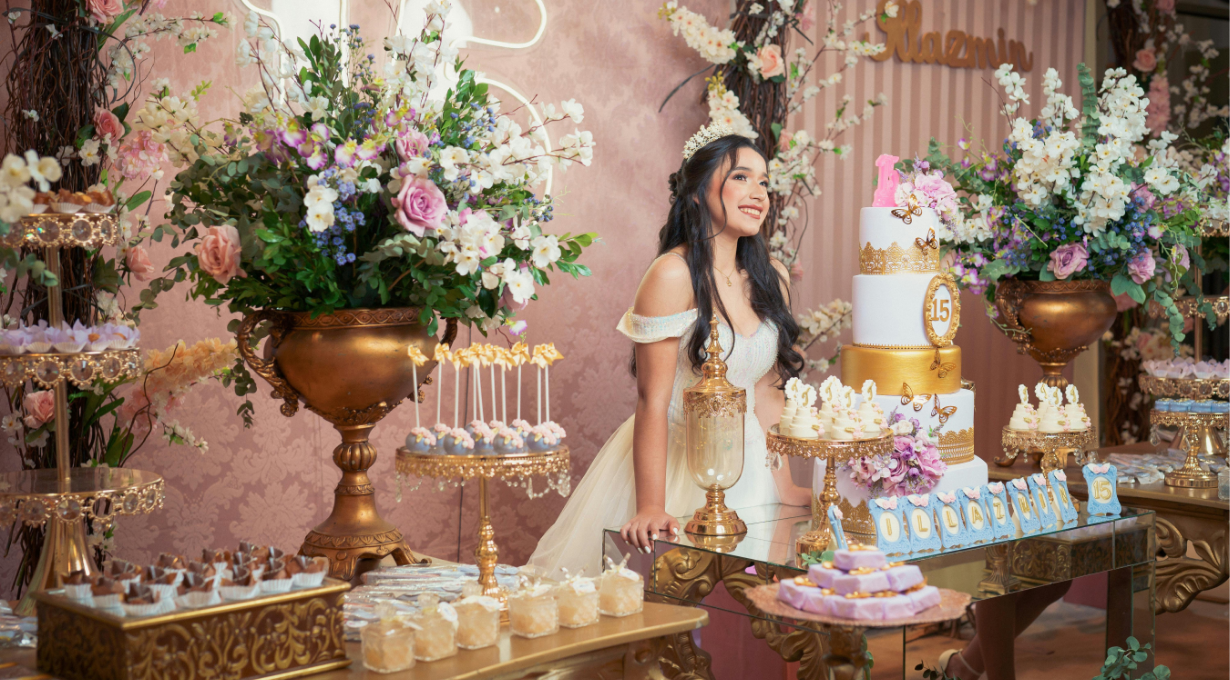
Nobody tells you that a sixteenth birthday hits differently until you’re standing in the room and feeling it yourself. Not because sixteen is some universally agreed-upon turning point, honestly, seventeen is probably more significant in terms of what you can actually do, but there’s something about the way we talk about sixteen, the way the culture built a whole mythology around it, that makes the day carry a kind of weight other birthdays don’t. The 16 wishes candles tradition grew out of that weight.
And if you landed there because someone you love is about to turn sixteen, or because you are trying to plan something meaningful rather than just throwing a party with good food and a print cell, keep reading. This is not a listicle of tips. It’s a real attempt to explain what this form is, why it matters, and how to do it in a way that the birthday girl actually remembers twenty times from now.
So What Exactly Are 16 Wishes Candles?
The short version: sixteen people, usually chosen by the birthday girl or her family, each light a candle and speak a wish over her life. That’s it. Simple enough to describe in one sentence.
But the thing is, nothing about the moment is actually simple. When it’s done right, what you’re watching is essentially sixteen public declarations of love. Sixteen people who could have written a card or bought a gift instead chose to stand up in front of a room full of people and say something out loud about who this girl is and what they’re hoping for her.
That’s a different thing entirely. It’s not a party activity. It’s a rite of passage that just happens to have candles in it.
The wish someone speaks when they step forward isn’t really about them getting what they’re wishing for — it’s about the girl hearing, at sixteen, while she’s still figuring out who she is, that specific people see her specifically. Not as a daughter in general. Not as a friend in a vague sense. But as her, with her particular way of moving through the world.
A lot of adults don’t hear that kind of thing until they’re much older. The ceremony gives it to her at sixteen.
Where Did This Come From?
Coming-of-age celebrations aren’t new. The quinceañera marks fifteen in Latin American culture with religious ceremony and genuine community ritual. The Filipino debut tradition does something similar at eighteen. Debutante balls in the American South existed as formal presentations of young women into society, complete with their own rituals and protocols.
The sweet sixteen as Americans know it today is a more informal version of that same instinct — the idea that moving from childhood toward adulthood deserves acknowledgment, not just a cake and some presents.
The candle form specifically got famous through the 2010 Disney Channel movie 16 Wishes. The film is not about the candle form exactly; it’s about a girl whose birthday wishes start coming true, but it tapped into a real thing that a generation of girls formerly felt about turning sixteen. That it was supposed to mean commodity. That it was a doorway, not just a date.
Since then, sweet sixteen celebrations in the US started incorporating candle ceremonies more deliberately, and the format has been personalized and adapted by thousands of families into what it is now — a structured but deeply personal moment at the center of the party. This instinct to mark a milestone with words and gathered people shows up across cultures; you see it in the warmth behind African birthday wishes just as much as you see it here.
Why It Matters More Than the Decorations Do
You can spend fifteen thousand dollars on a sweet sixteen and still have your daughter remember it mostly for what someone said to her in a quiet moment, not for the venue or the dress.
That’s not a knock on throwing a beautiful party. There’s nothing wrong with beautiful. But what actually sticks is being seen. And at sixteen, when you’re in the middle of figuring out whether you’re enough, whether the people around you actually know you, whether the version of yourself you show to the world matches the one on the inside — having sixteen people stand up and say “I see you, and here’s what I see” is something no DJ or dessert table can replicate.
The ceremony creates a structure for that. It forces people who love her to show up with words instead of just presence. A lot of the people who will light candles would never naturally say what they say in that moment. Not because they don’t feel it. Because life doesn’t usually make space for it. The ceremony makes the space.
And then those words exist in her memory. Permanently. In a way that the Instagram photos from the same night eventually won’t. Psychologists have long noted that specific verbal affirmation shapes how teenagers see themselves, which is exactly why a named, personal wish lands differently than a general one.
Choosing the Sixteen People
This is probably the decision that shapes the ceremony most, and it deserves more thought than most families give it early on.
The question isn’t “who should we invite to light a candle?” The better question is: whose words, specifically, does she need to hear at sixteen?
That shifts the framing entirely. Instead of thinking about social obligations — who will be offended if they’re not included, whose turn it is, who’s technically the closest relative — you start thinking about impact. Who in her life has actually shaped her? Who has said things to her, through their presence or their words or the way they’ve shown up during hard times, that have changed how she sees herself?
Those are your candle-lighters. Family, yes — but not just family. Her grandmother, who calls every Sunday. The coach who saw something in her before she saw it in herself. The best friend who has been in her corner since third grade and stayed through every awkward phase. The family friend who feels more like an aunt than half the people in the actual family tree.
Men absolutely belong in the ceremony, too. Fathers, brothers, grandfathers, uncles, family friends — the men who have loved her and shown up for her have shaped her as much as the women have, and a ceremony that excludes them because it’s “a girl’s thing” misses the point.
It also helps to ask the birthday girl directly. She knows whose words she needs. She may be too polite to say it outright, but if you give her the space to tell you, she will.
How the Order Typically Works
Most families don’t do this randomly. There’s usually some thought put into the sequence, because the order of the candles shapes the emotional arc of the ceremony.
The first few candles tend to go to the people who have known her the longest — parents, grandparents, siblings. The people whose history with her goes back to the very beginning. Their words carry the weight of time, and time is what opens the ceremony.
From there, many families move outward — to extended family, then to close family friends, then to her own friends, the relationships she has built herself. That movement from the family she was born into toward the world she’s been building for herself mirrors what sixteen actually is. It’s the start of her own life taking shape alongside the one she was given.
The last candle is the most significant. Whatever you decide about the rest of the order, save candle sixteen for someone whose relationship with the birthday girl is singular. The person whose words, of all sixteen, are the ones she’ll carry the longest. Often a mother. Sometimes a grandmother who flew in from across the country. Sometimes, a best friend who has simply been there for everything.
Whatever happens in the room during the first fifteen candles, candle sixteen should be the one that makes it go completely quiet.
What to Actually Say
Most people, when asked to prepare a speech for the candle form, either over-prepare (they write a five- nanosecond speech that does not leave room for breath) or under- prepare (they stand up and go blank because they assumed they’d know what to say in the moment).
The ones that actually land the wishes that make the room go silent, that the birthday girl cries over, that she quotes back times later, are nowhere the most eloquent. They are the most specific.
Before you write anything, think about one particular moment with this girl. One memory that is yours and not anyone else’s in that room. Something you watched her do, or something she said to you, or a season you went through with her that changed how you understood who she was. Writing something real for someone you love is never easy; the same struggle shows up when people try to write happy birthday wishes for him that actually mean something.
What 16 Wishes Candles Can Sound Like in Practice
Start there. Then tell her what you want for her. Not in sweeping terms. In specific ones.

A mother might say something like: “I watched you handle something last year that would have broken a lot of grown women. You didn’t say much about it. You just got through it. I don’t know if I ever told you how proud I was watching that happen. What I want for you going forward is that you trust yourself the way I trust you. Because that instinct you have — the one that got you through — it’s not going anywhere.”
A best friend might say: “Everyone sees the version of you that has it together. I’m the one who gets the texts at 11 pm when you don’t. And for the record, I love that version more. I hope you always have someone you can fall apart in front of. And I really hope it’s still me.”
A grandfather might say: “I’m not good at this kind of thing. But I’ve been watching you your whole life, and I want you to know that you turned out better than any of us had a right to hope for. Your grandmother would have loved who you’ve become. I love who you’ve become.”
None of those are polished. They’re true. That’s the difference.
The Practical Details That Actually Matter
Get the candelabra sorted early. If you’re using candles on the actual birthday cake, think through whether sixteen candles actually fit — larger tiered cakes handle it better, but it’s worth checking before the party, not during it. Plenty of families use a separate candelabra display or individual candle holders arranged on a table near the cake, which actually tends to look more intentional and is easier to manage.
Have a printed order ready for whoever’s running the ceremony — a DJ, an MC, or a trusted family member. Trying to do it from memory leads to awkward pauses and people being called up in the wrong sequence.
Ask people in advance how they plan to deliver their wish. Some will read from a card. And some will speak from memory. Some might want to hand something written to the MC rather than speak directly. All of those work. What doesn’t work is finding out during the ceremony that someone wasn’t prepared at all.
A long-reach lighter is genuinely better than a regular one for lighting candles at a distance or in a holder. Bring two. Candles and nerves and formal clothing are a combination that goes sideways more often than you’d think.
Low background music during the ceremony helps — something instrumental, low enough that the wishes are the thing you’re actually listening to. And put tissues on the tables. Not as an afterthought. As a necessity.
16 Wishes Candles; Weaving Faith Into the Ceremony
For families where faith is real and lived, not just cultural background but actual daily faith, the candle ceremony is an opportunity for something that goes deeper than well-wishing.
A lot of Christian families incorporate a prayer of blessing at the close of the ceremony. Some ask everyone who lit a candle to gather around the birthday girl together for a laying-on-of-hands prayer before the final candle is blown out. Standing in a room full of people who love you and hearing them call on God on your behalf, that’s nothing. That’s the kind of moment a girl remembers at thirty-five.
Others open the ceremony with Scripture. Something that speaks to her character or her calling, read by someone who knows her well enough to choose it specifically for her. Jeremiah 29:11 gets used a lot at these ceremonies, and for good reason, but if you can find something that fits her particular story, that specificity carries more weight than the famous verse does. Jeremiah 29:11 is one of the most-used verses at these ceremonies, and reading it in its full context gives it a weight that quoting it from memory alone doesn’t quite capture.
Some families ask each candle-lighter to pair their personal wish with a verse they’re believing for her. It doesn’t have to be announced as a faith ceremony. It just is one, because the people in it are people of faith, and you can’t separate who they are from what they believe.
If that’s your family, don’t dilute it. The specificity of a real blessing is what makes it irreplaceable. If your family wants to open the ceremony with something grounded in Scripture, these prayers for healing carry the kind of language that fits a moment like this.
Wishes for the People Who Aren’t Lighting Candles
Not everyone at the party will be part of the candle ceremony, but they still want to say something. A few lines worth writing in a card or saying directly to her, if you’re looking for words that actually mean something:
Sixteen looks good on you — but honestly, so did every year before this one. You’ve always been more than the number.
My wish for you is that you learn early what takes most people decades: the difference between being liked and being loved, and why only one of them is worth building your life around.
I hope this year gives you at least one moment where you surprise yourself. You’re more capable than you’ve been told.
May the people around you going forward deserve you. And may you have the clarity to leave the ones who don’t.
God has a plan for the woman you’re becoming. I’ve seen the beginning of it. It’s already worth watching.
A Word Directly to the Girl Turning Sixteen
If you’re sixteen and you’re reading this before your own ceremony — maybe you’re trying to understand it, maybe you’re nervous about being the center of it, maybe someone sent you this link — here’s what I want to say directly to you.
When those people stand up to say something over your life, let them. Don’t laugh it off. Don’t look at the floor to avoid getting emotional. Look at them. Let the words actually reach you, because those words are real and they’re about you, and you deserve to receive them fully.
A lot of people spend years never being told specifically why they matter to someone. You’re about to have sixteen people stand up and do exactly that. Don’t waste the moment by being too uncomfortable to be in it.
And if the ceremony doesn’t go the way you imagined — if someone forgets what they were going to say, or the candles are finicky, or you cry and can’t stop — none of that changes what’s actually happening. The people in that room came because they love you. The candle is just the reason they’re saying it out loud.
Final Thoughts
The 16 wishes candles ceremony is the kind of tradition that sounds simple and then completely undoes a room full of people in the best possible way. Sixteen flames. Sixteen people who chose to show up with words instead of just gifts.
If you’re planning it, don’t rush it. Give the ceremony enough space in the evening that it doesn’t feel like an item being checked off. If you’re lighting a candle, don’t coast on something generic. She will carry what you say. Make it worth carrying.
And if you’re the one turning sixteen, this is yours. Take all of it in.