

Prayer has always been at the heart of the Christian faith. From the earliest church gatherings to modern-day prayer circles across the United States, believers have turned to prayer as a source of strength, guidance and peace. Yet, Scripture speaks of a deeper dimension of prayer—one that goes beyond spoken words and enters into spiritual alignment with God. This is what the Bible refers to as praying in the Spirit. For many believers, this phrase raises questions, curiosity and sometimes confusion.
In cities like Houston, Charlotte and Minneapolis, churches and small faith communities often teach about Spirit-led prayer as a response to modern pressures—stressful work lives, family responsibilities and spiritual dryness. This guide is written to clarify what praying in the Spirit truly means, explore the most important Bible verses on the topic and provide practical, biblical ways to experience this kind of prayer in everyday life.
What Does It Mean to Pray in the Spirit?
Biblical meaning of praying in the Spirit
Praying in the Spirit means allowing the Holy Spirit to guide your prayer. It is not about reciting perfect words or following a fixed formula. It is about surrendering your thoughts, desires and concerns to God while trusting the Spirit to lead the conversation.
Romans 8:26 explains that believers often do not know how to pray as they should. In those moments, the Holy Spirit intercedes, communicating the heart’s needs to God. This shows that praying in the Spirit is rooted in dependence, humility and trust rather than performance.
Spirit-led prayer vs emotional prayer
Emotions naturally appear in prayer. Joy, grief, fear and gratitude all surface when people talk to God. However, Spirit-led prayer is not driven by emotion alone. It is guided by faith and discernment. The Holy Spirit brings balance, clarity and direction, even when emotions feel overwhelming.
For example, during prayer walks held near local landmarks such as the National Mall in Washington, D.C., many believers share that quiet, Spirit-led moments bring more peace than emotional expressions alone.
Why praying in the Spirit matters today
Modern life is filled with distractions. Notifications, schedules and constant noise make it difficult to slow down. Praying in the Spirit helps believers pause, listen and realign with God’s presence. It nurtures spiritual maturity and helps prayers reflect God’s will rather than personal pressure.
Key Bible Verses That Teach Praying in the Spirit

Romans 8:26–27 — When the Spirit Intercedes
This passage teaches that the Holy Spirit intercedes for believers with groanings too deep for words. God understands the Spirit’s intercession because it aligns perfectly with His will.
Practical insight: Prayer does not lose value when words fail. Silence before God can be Spirit-led prayer.
Ephesians 6:18 — Praying in the Spirit at All Times
Paul encourages believers to pray at all times in the Spirit while remaining alert and persistent. This verse connects prayer to spiritual readiness and consistency.
Many believers practice this during daily routines—while commuting on busy highways in Los Angeles or during quiet early mornings before work.
Jude 1:20 — Building Faith Through Spirit-Led Prayer
Jude emphasizes that praying in the Holy Spirit strengthens faith. It helps believers grow spiritually and remain grounded during challenging seasons.
1 Corinthians 14:14–15 — Spirit and Understanding
Paul highlights balance in prayer. While spiritual depth matters, understanding also plays an important role. Praying in the Spirit does not exclude thoughtful reflection.
John 4:24 — Worshiping in Spirit and Truth
Jesus teaches that true worship is not bound to a place. It flows from the spirit and is grounded in truth. Prayer and worship are deeply connected through Spirit-led devotion.
Bible Verses About the Holy Spirit’s Role in Prayer
Galatians 5:16–17 — Walking in the Spirit
Prayer becomes more meaningful when daily life reflects spiritual obedience. Walking in the Spirit supports effective prayer.
Acts 1:8 and Acts 2:4 — Power and Boldness
The early believers prayed under the guidance of the Holy Spirit and experienced spiritual boldness. This same principle is taught today in prayer conferences and worship gatherings held in cities like Orlando and Kansas City.
Romans 8:14–16 — Led as Children of God
The Holy Spirit confirms believers’ identity during prayer. This assurance strengthens confidence and trust in God.
Praying in the Spirit vs Praying With Words
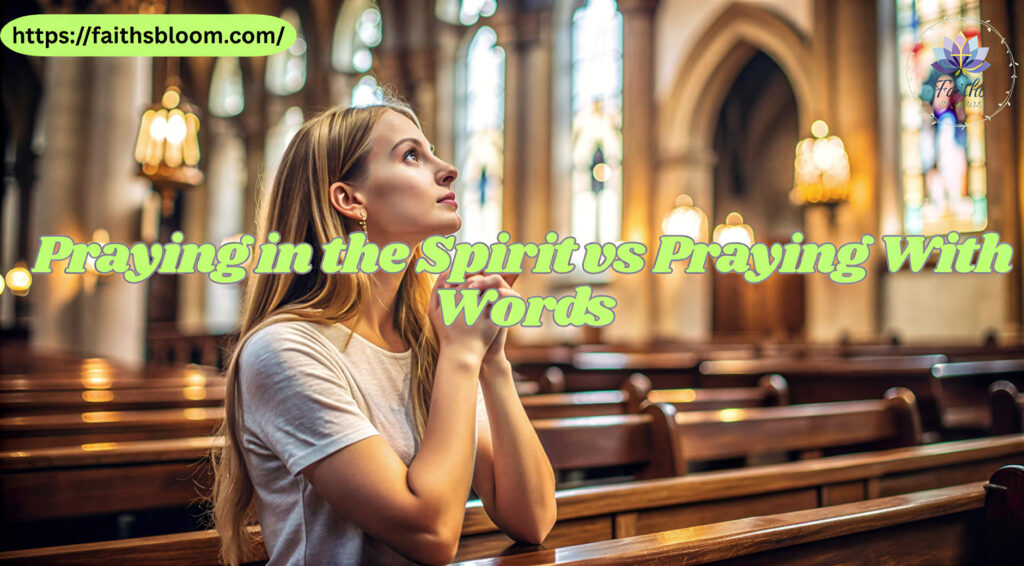
Is praying in the Spirit only speaking in tongues?
Scripture does not limit praying in the Spirit to speaking in tongues. While tongues are mentioned in certain passages, praying in the Spirit also includes silent prayer, Scripture-based prayer and guided reflection.
Heartfelt prayer matters
God responds to sincerity. A whispered prayer offered in faith carries the same weight as spoken prayer.
Mind and Spirit working together
Effective prayer engages both spiritual sensitivity and understanding. Faith and awareness work side by side.
How to Pray in the Spirit (Practical Biblical Steps)
Prepare your heart
- Confess distractions
- Release anxiety
- Focus attention on God
Invite the Holy Spirit
Begin prayer by asking the Holy Spirit to lead your thoughts and words.
Pray Scripture
Using Bible verses helps anchor prayer in truth and clarity.
Stay attentive
Be mindful of peace, conviction or gentle guidance during prayer.
Trust the process
Not every prayer brings immediate answers. Growth happens over time.
Connection Between Worship and Praying in the Spirit

Why worship prepares the heart
Worship shifts focus from problems to God. Many local churches host midweek worship nights that encourage Spirit-led prayer through music and reflection.
Seven biblical ways to express worship
| Expression | Meaning |
| Barak | Kneeling in humility |
| Halal | Joyful praise |
| Shabach | Bold praise |
| Tehillah | Spirit-led singing |
| Towdah | Thankful praise |
| Yadah | Raised hands |
| Zamar | Musical worship |
Common Misunderstandings About Praying in the Spirit
It is not limited to leaders
Every believer can pray in the Spirit.
It does not require perfection
God responds to faith, not flawless delivery.
It grows with practice
Spirit-led prayer develops through consistency and trust.
Benefits of Praying in the Spirit
- Deeper spiritual awareness
- Peace during difficult seasons
- Alignment with God’s will
- Strengthened faith
Many prayer groups meeting in community centers and churches report stronger unity through Spirit-led prayer.
Encouragement for Believers Learning to Pray in the Spirit
Begin with honesty. Stay consistent. Trust God’s presence. Whether praying alone at home or joining a local prayer gathering, sincere prayer always matters.
Conclusion
Praying in the Spirit is not a method reserved for a select few. It is an invitation for every believer to experience a deeper relationship with God. Scripture consistently teaches that the Holy Spirit guides prayer, strengthens faith and aligns hearts with God’s purpose.
As believers continue to seek God through Spirit-led prayer—whether in quiet homes, local churches or community gatherings—the promise remains the same. God listens, the Spirit intercedes and faith grows stronger through sincere, guided prayer.
FAQs
What is considered praying in the Spirit?
Praying under the guidance of the Holy Spirit with faith and sincerity.
What is the difference between praying in the Spirit and praying with the Spirit?
Both involve spiritual guidance, but praying in the Spirit emphasizes full dependence on God’s direction.
What does Ephesians 6:18 teach about praying in the Spirit?
It calls believers to pray consistently while remaining spiritually alert.
Does praying in the Spirit always involve tongues?
No. The Bible describes multiple expressions of Spirit-led prayer.
What does it mean to worship God in spirit and truth?
To worship sincerely, faithfully and in alignment with Scripture.
What are the seven biblical ways to worship?
Barak, Halal, Shabach, Tehillah, Towdah, Yadah and Zamar.
How can I worship God daily through prayer?
By praying consistently, living obediently and trusting the Holy Spirit.
RELATED POSTS:
Wonderful, Inspiring Bible Quotes Women Really Should Know for Strength
Bible Verses About Frustration – Finding Peace and Strength Through Faith
Powerful Birthday Prayer for Myself